OpenSCAD trick - negative rounding

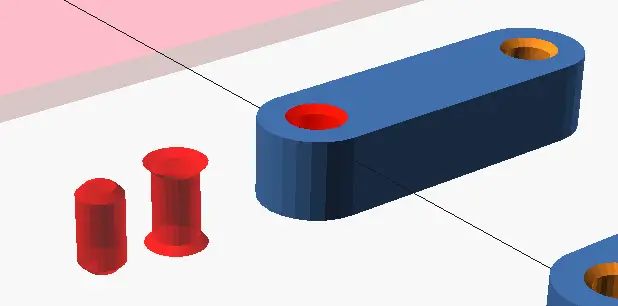
OpenSCAD pins with positive and negative chamfer

Somehow, OpenSCAD has become my main 3D modeling program. It’s incredibly powerful for parametric models but it’s also brain-intensive. I speed up development with the BOSL2 library. Many BOSL2 objects have built-in rounding features so I don’t need to invoke minkowski().

A trick with BOSL2 is negative rounding. Instead of cutting a corner, it makes the corner stick out. This is very useful for smoothing sharp edges, tapering pin holes, and generally filleting odd shapes. Make an object with negative rounding/chamfer, then use it to cut another object with subtract().

[Read More]
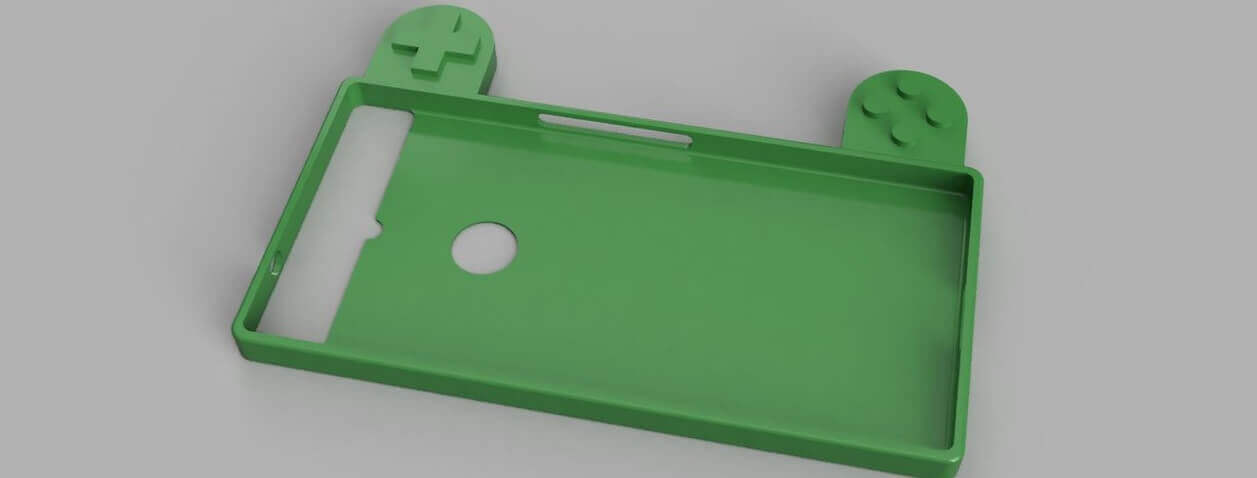
3d printed wrist brace – WIP instructions

I won’t be able to finish my wrist brace project for a while. These instructions are very rough because they’re not actually finished. 

Post in comments if anything needs clarification.

Scanning

requirements:

  • Windows
  • Kinect (with power adapter)
  • beefy CPU or an NVidia GPU (with CUDA drivers)
  • Kinect for Windows SDK 2.0
  • Skanect software
  • an assistant
  • a small open area

Here’s the Skanect guide I watched:

https://www.youtube.com/watch?v=_cKb3oEM47E

[Read More]

3D printed wrist brace WIP

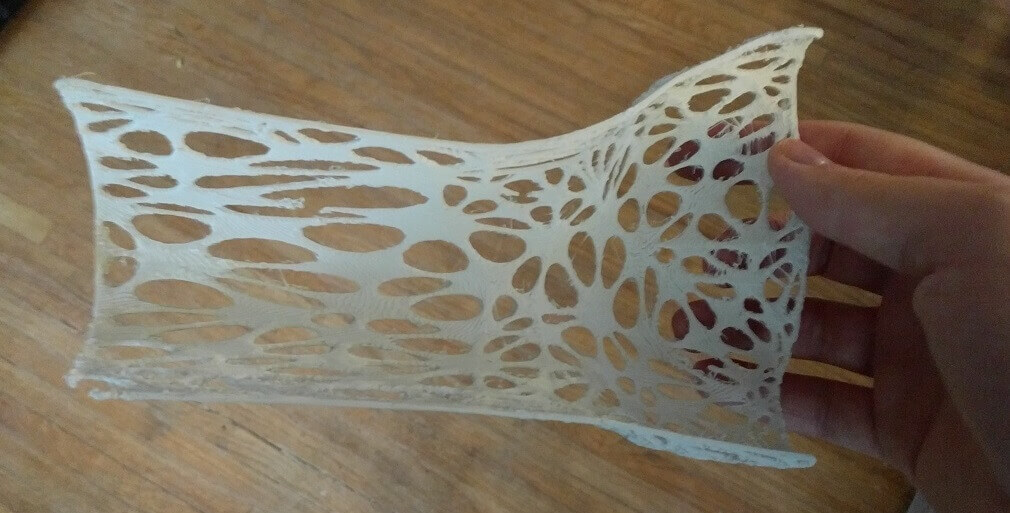
This is a custom 3D printed wrist brace that I’m working on. I wear wrist braces to sleep for RSI / carpal tunnel but they’re not ideal. The fabric construction is hot, sweaty, and not supportive around the knuckle area of the hand. The velcro is noisy, sticks to bedding and lint, and is wearing out over time. I want something rigid, breathable, and quiet.

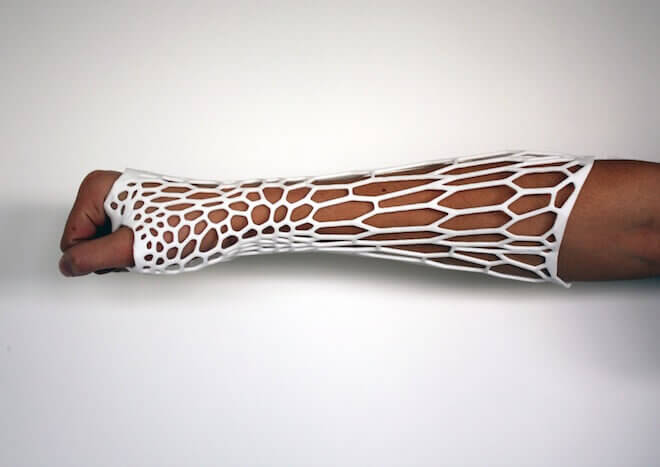
3D printed cast I saw online

The design was inspired by this 3D printed cast I saw online. I scanned my arm with a Kinect using the Skanect program, then edited the model in Blender to make the brace. My plan a two-piece clamshell, probably held by o-rings or similar. I may add a hinge in the future.

[Read More]